

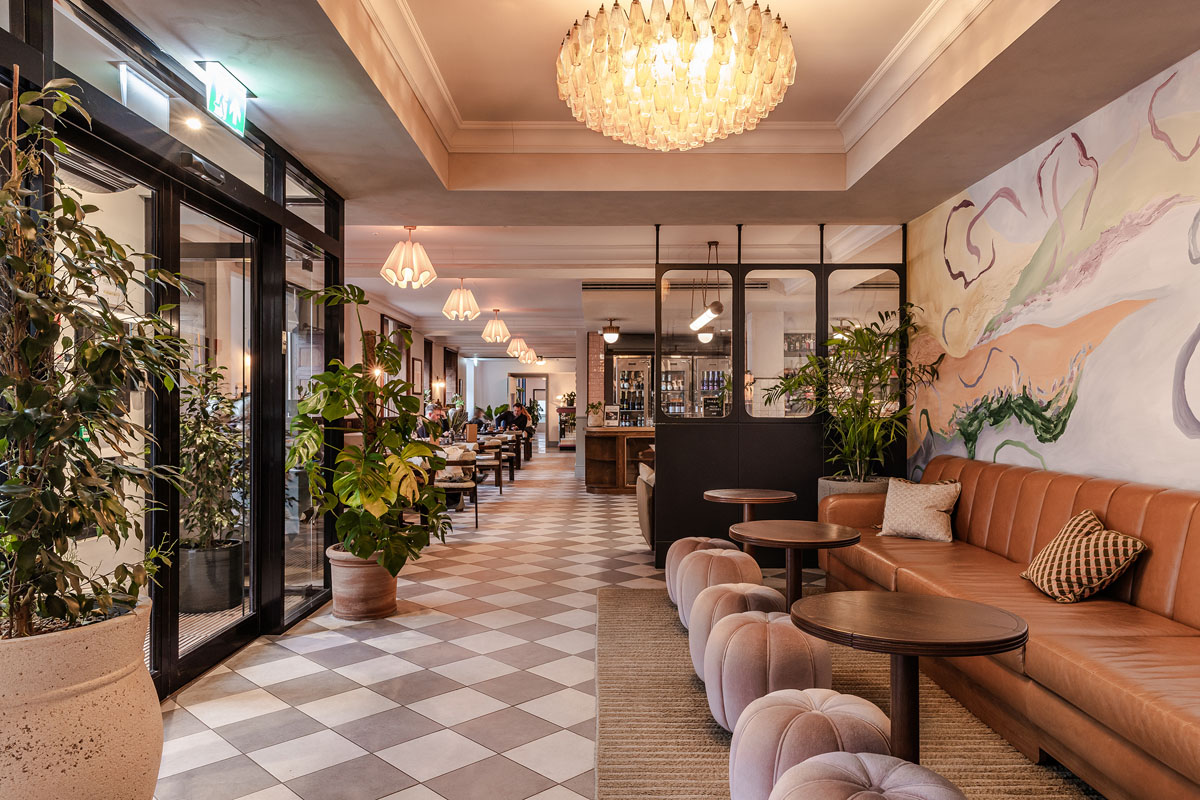
There is a discipline that separates the most compelling hospitality properties from those that simply look good on a moodboard: orchestration. The idea that every element of a built environment – light, material, form, texture, greenery – works together as a coordinated whole, rather than as a collection of good intentions added at different stages of a project.
Planting is, too often, the element that gets added last. Budget pressures tighten, the contractor programme overruns, and the interior designer’s vision for cascading ficus trees in the atrium quietly becomes a few potted specimens, quickly briefed to a local supplier. The result is a space that looks almost right – but doesn’t feel it.

Integrating specialist planting expertise
The case for integrating specialist planting expertise from the outset of a hospitality project is not aesthetic, it’s financial. Research published in the Interface Human Spaces 2.0 report found that hotel rooms with a direct view of nature command up to 18% higher average daily rates than equivalent rooms without one. Separate analysis cited by Cornell’s Center for Hospitality Research indicates that hotels with high-quality biophilic design see significantly higher guest well-being scores and greater willingness to pay a rate premium. A 2025 industry benchmark cited by Hotel Bar Design 2026 noted that properties with comprehensive biophilic features recorded 108% higher TREVPAR than comparable properties without them.
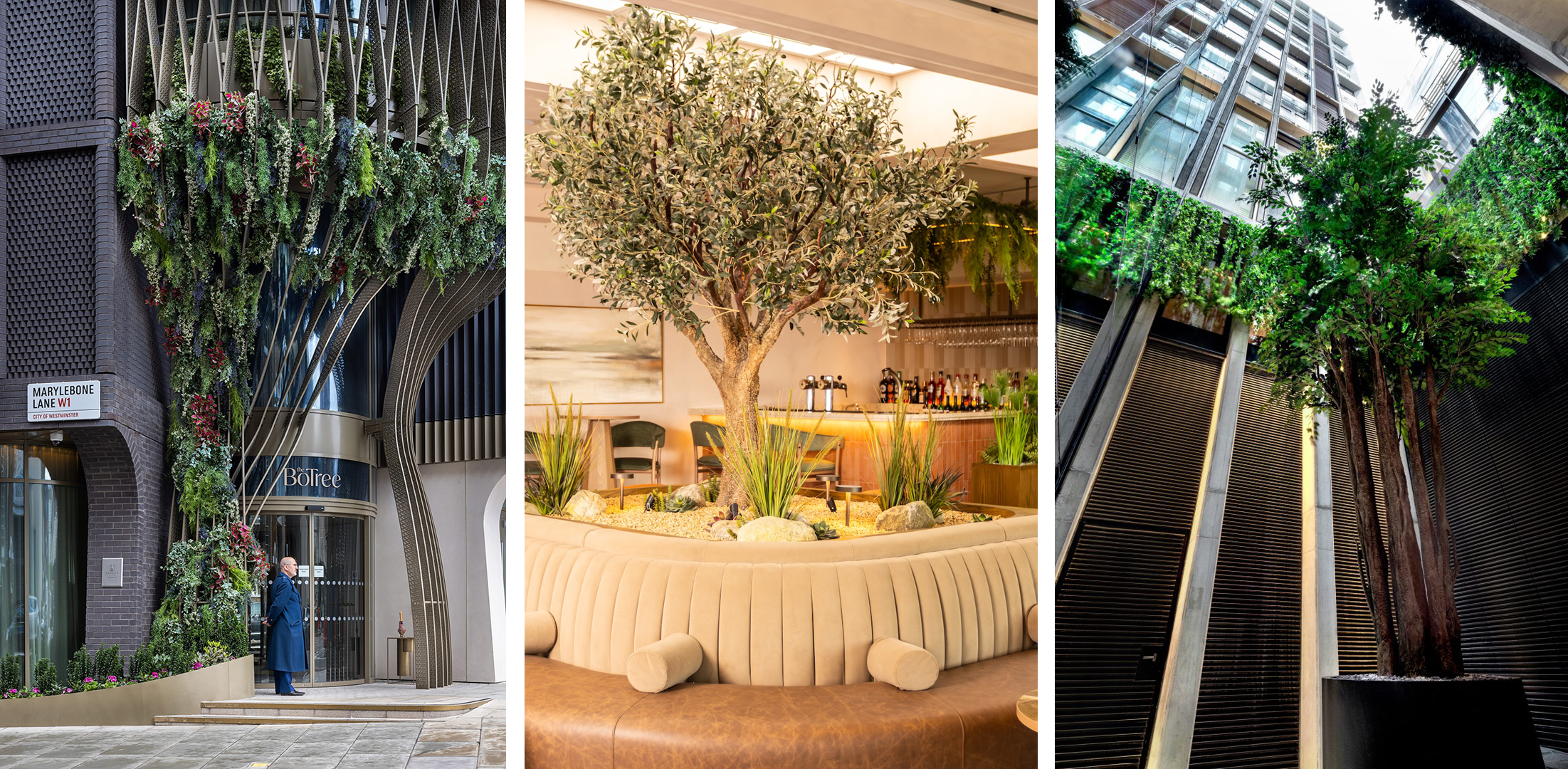
These are not marginal gains. They are the kind of numbers that should change how planting is treated in a project pro forma.
Orchestration means beginning the conversation about planting at the same moment you begin conversations about lighting design or FF&E. It means appointing specialists who can interpret or originate a planting concept, coordinate with architects and contractors, manage a complex installation programme, and then maintain the result to the standard required – indefinitely.
25 years of planting orchestration
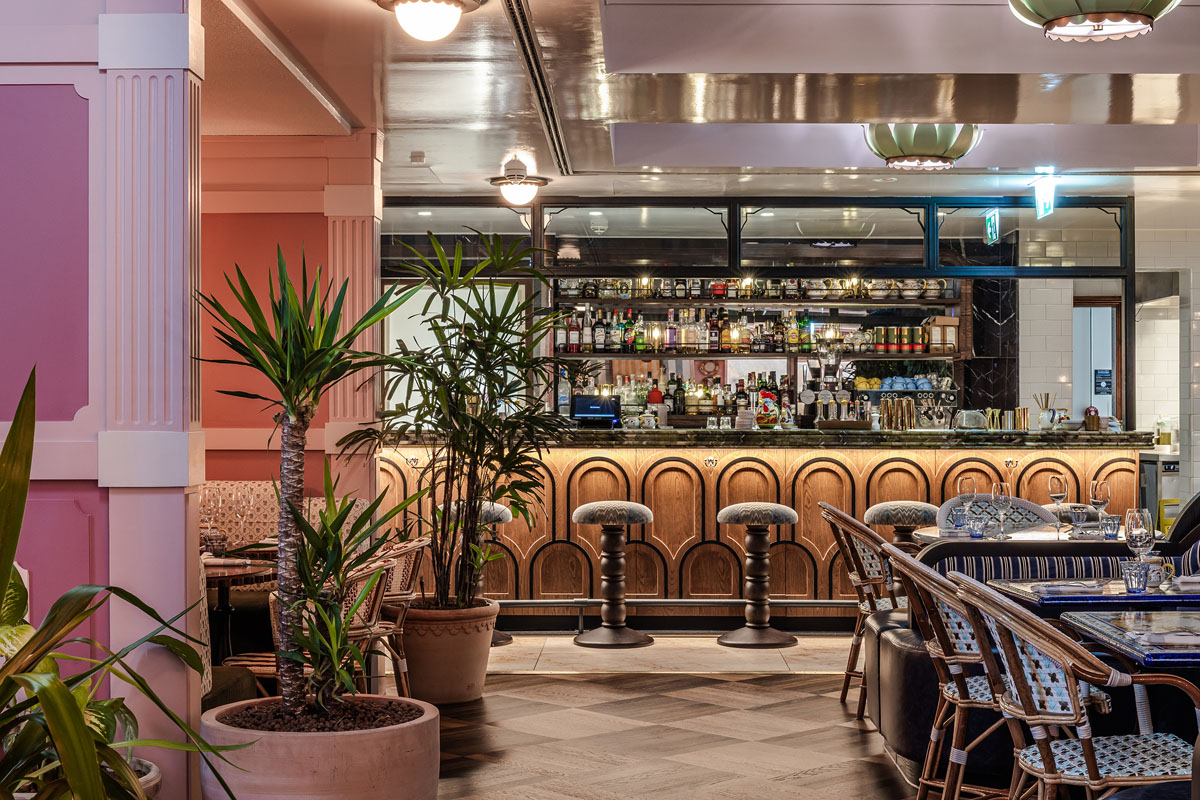
At Leaflike, we have spent 25 years developing precisely that capability. We work from design brief through to live installation across hospitality environments of genuine ambition — not as decorators, but as the orchestrators of spaces where the planting is architecturally integrated, ecologically considered, and operationally sustained.
The most prestigious properties in the world are not those with the most plants. They are those where every sensory element has been deliberately and expertly composed. Planting, done properly, is part of that composition.
The question is when you bring the conductor in.