

Environmental, social and governance criteria are reshaping how hospitality assets are valued, financed and operated. For developers and asset managers, the question is no longer whether ESG matters – it’s which interventions deliver genuine, evidenced performance against the metrics that investors and certification bodies actually measure.
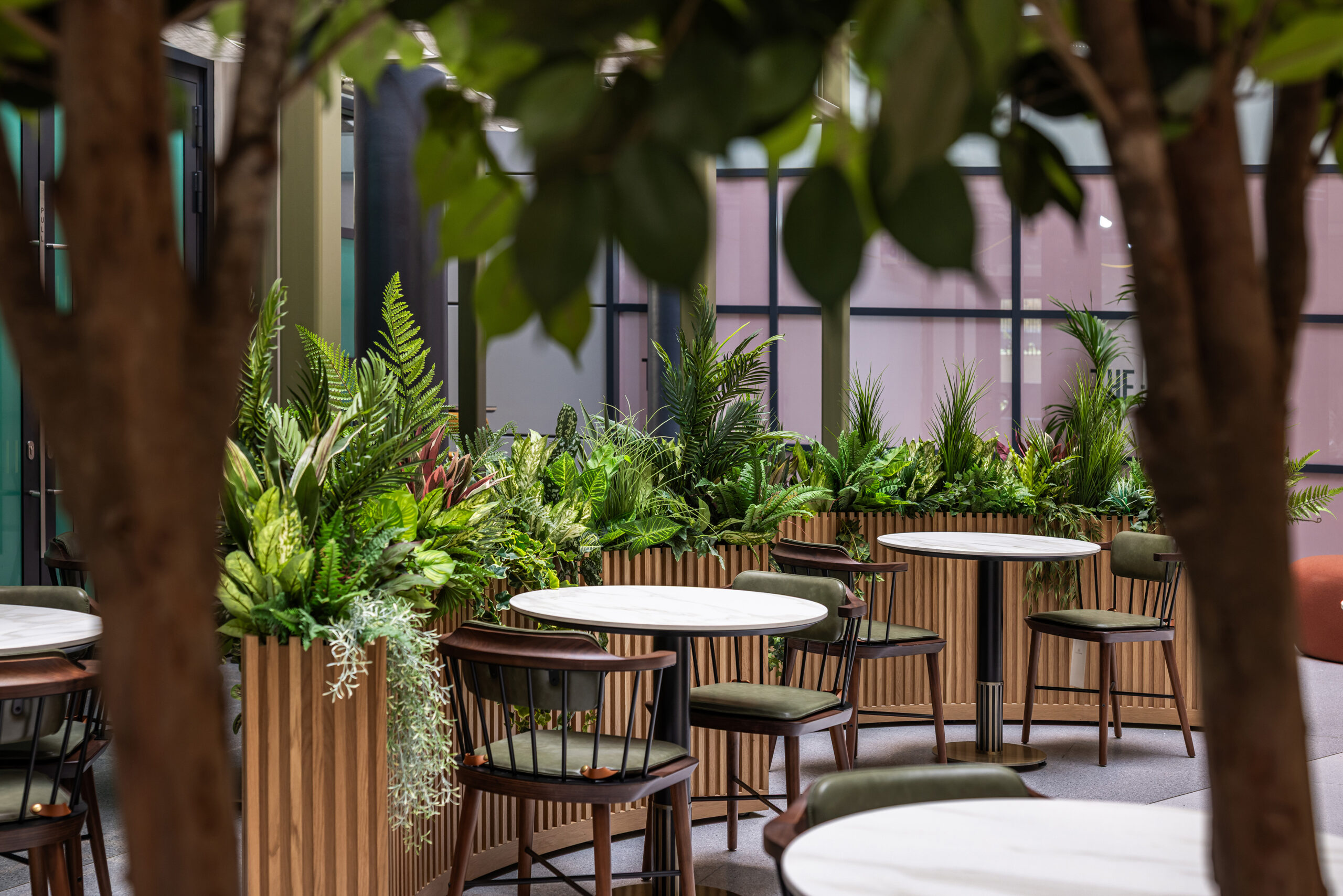
Biophilic design, and live interior planting in particular, offers a host of contributions that are often underestimated in ESG frameworks. They deserve closer attention.
On the environmental side, live planting schemes contribute to indoor air quality, thermal comfort and acoustic performance – all of which are directly relevant to WELL Building Standard certification, one of the most widely adopted frameworks for assessing building performance in the premium commercial and hospitality sectors. Plants absorb volatile organic compounds, moderate humidity and introduce the kind of visual and sensory ‘vibe’ that supports occupant wellbeing – a core WELL metric.
On the social dimension, the evidence that links access to natural elements and human psychological wellbeing is substantial. Research published in the International Journal of Environmental Research and Public Health has found that exposure to nature reduces cortisol and associated stress markers. In a hospitality context, this translates into the quality of guest experience and staff environment – both of which have operational and reputational implications for an asset’s long-term performance.
For operators pursuing sustainability credentials, the sustainability profile of the planting supplier also matters. Leaflike holds a Gold EcoVadis rating, awarded by the globally recognised platform for corporate sustainability assessment; this reflects our approach to ethical sourcing, carbon management, circular economy practice and social responsibility across our operations.
On the governance side, the discipline of a long-term maintenance contract creates the kind of structured, auditable stewardship that distinguishes a considered asset management approach from a one-off capital investment. A well-maintained biophilic scheme is an ongoing commitment to the quality of the built environment – and a signal to guests, investors and rating agencies that the operator takes that commitment seriously.
As Deloitte research has noted, 73% of luxury travellers now prioritise sustainability in their booking decisions. For hospitality developers, biophilic design that is genuinely planted, genuinely maintained and genuinely reported on is not a cosmetic addition to an ESG narrative – it’s central to it.