

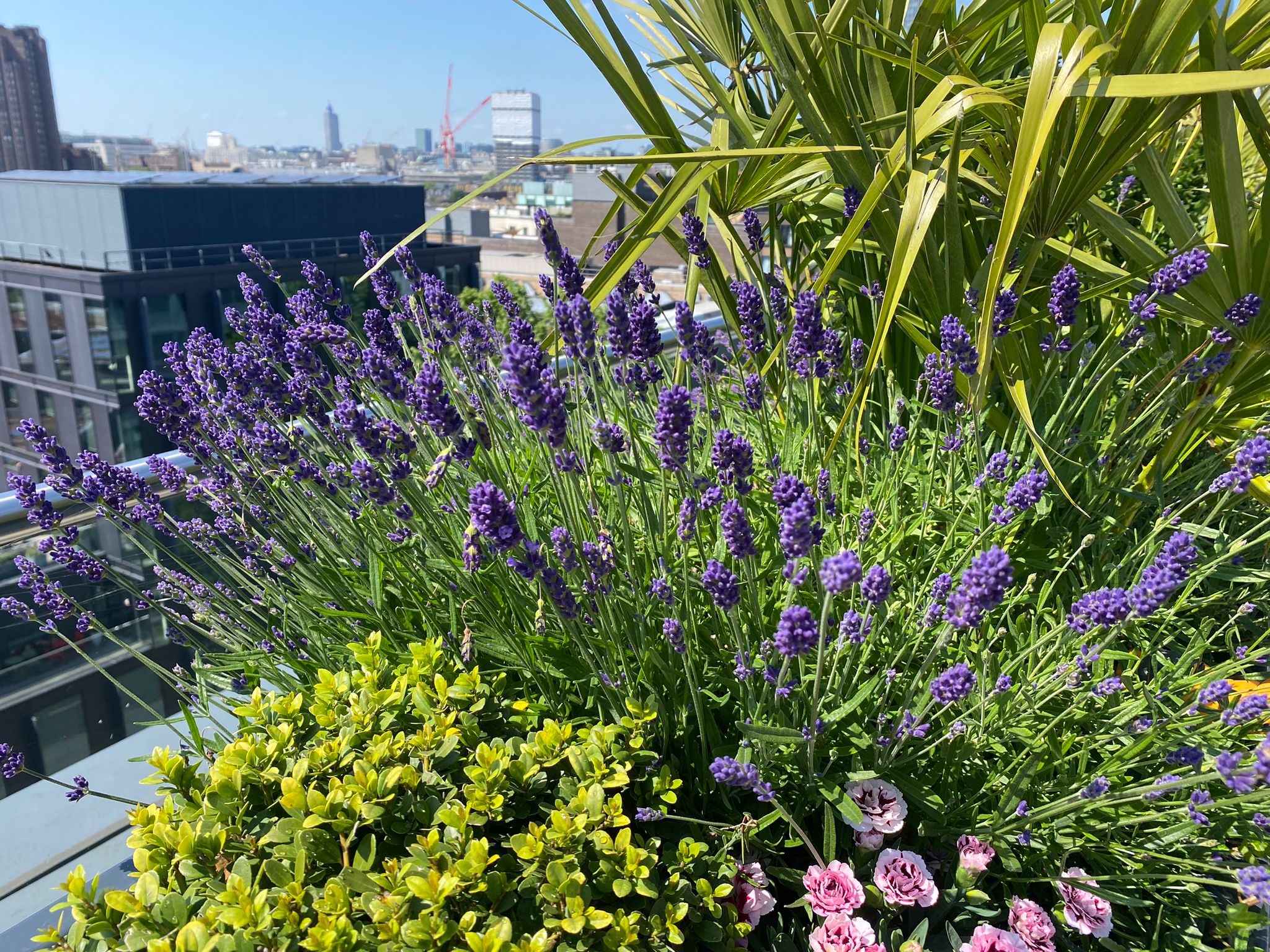
Every development has a moment when the landscape looks its best for a camera: the day of handover, before anyone has moved in, when everything is freshly planted and exactly as drawn. It is also the day the landscape is furthest from what it will actually become.
An exterior landscape is not a finished object at practical completion. It’s a living system at the very start of a trajectory – one that a good design plans for deliberately, not one that simply happens to it.
Why an opening day photograph isn’t the design brief
Interior planting can be held in a fairly constant state – controlled light, controlled climate, limited seasonal variation. Exterior landscapes can’t be, and shouldn’t be designed as though they can. A scheme designed only to look right in the handover photography will look considered for exactly one season, then start working against itself: overcrowded, underperforming, or requiring the kind of reactive intervention that costs far more than planning for growth would have. Designing for evolution from the outset – how a planting scheme will read in year one, year five and year twenty – is what keeps a landscape improving instead of declining after handover.
What ongoing care actually involves outdoors
- Seasonal care planned around how a scheme is designed to change through the year, not a generic visit schedule
- Establishment care in the first one to two years, when a landscape is most vulnerable and most likely to underperform without proper attention
- Resilience to weather and site conditions that shift year to year, adjusted for rather than treated as an exception
- Honest replacement or adaptation of elements that aren’t performing, rather than leaving gaps or ignoring decline
Designing today for years five, ten and twenty
Species selection, spacing and structural planting decisions made at concept stage determine how a landscape matures – whether it fills in as intended or becomes overgrown, thin, or in need of expensive correction. This is a design decision, made with the site’s long-term trajectory in mind from the start, not a problem to be solved later.
Why continuity of ownership matters
The team that designed a landscape understands what it was meant to become. A team that inherits it after handover is working from someone else’s intent, at best guessing at decisions they weren’t party to. Keeping design and ongoing care with the same team, from first drawing through years of establishment and beyond, means the landscape is tended toward what it was always meant to be – not reinterpreted by whoever takes over its care next.
Frequently asked questions
Does an exterior landscape look the same all year round?
No, and it shouldn’t. A well-designed exterior landscape is planned to perform across every season, not just for the moment it’s photographed at handover.
Who is responsible for an exterior landscape after handover?
This should be agreed at the specification stage and named in the contract. The strongest model keeps design and ongoing care with the same team throughout, so the original intent is maintained rather than reinterpreted.
How far ahead should an exterior landscape be designed?
Good practice designs for how a site will look and perform in five, ten and twenty years, not only for the point of handover.
Brief us on your project, and we’ll talk you through how we’d design it for where it needs to be in twenty years, not just on opening day.