

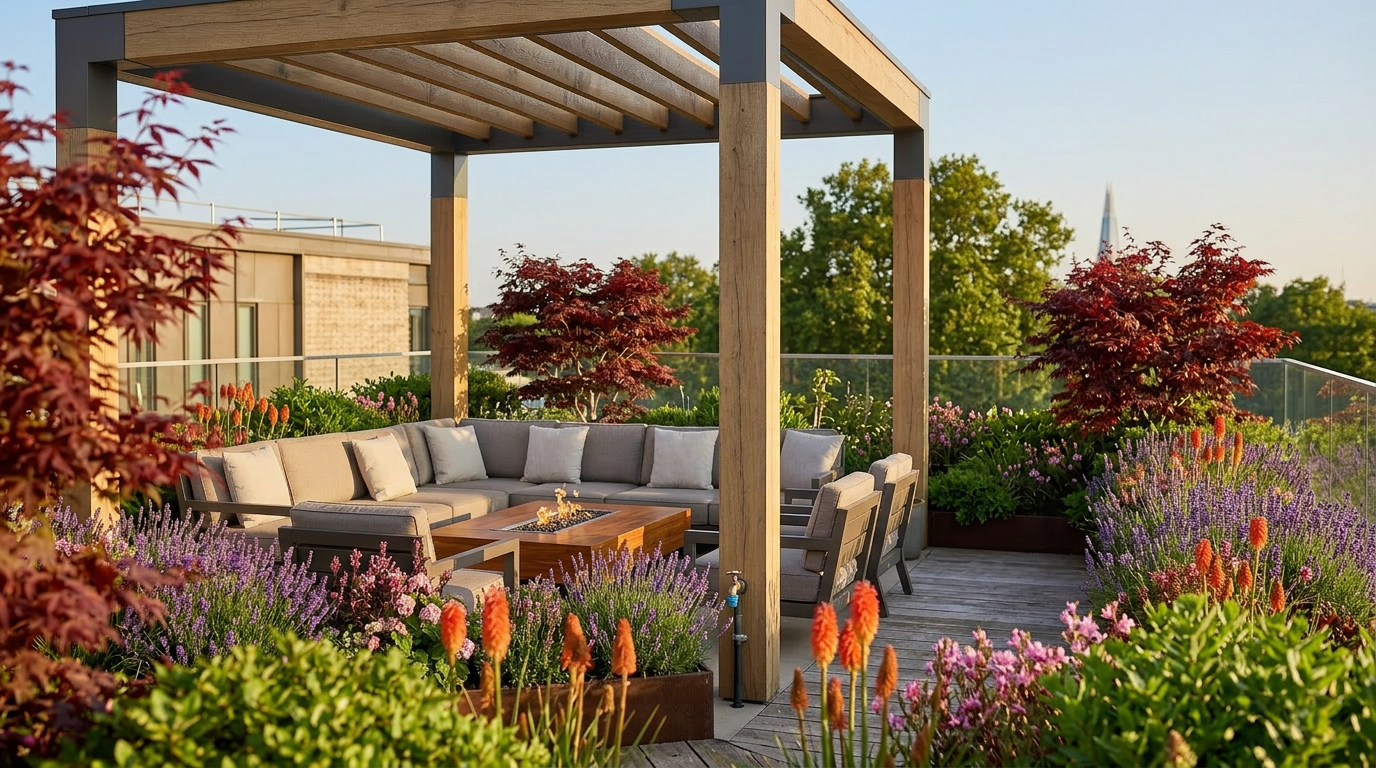
Landscape is not something you add once the architecture is finished. It’s something you compose alongside it, and it needs to be brought into the brief at the same stage as everything else that shapes how a site is experienced.
Ideally, a landscape architecture partner is appointed at concept design, working alongside the architect and structural engineer rather than being introduced once groundworks are underway. Soil conditions, drainage strategy, and structural loading for planting on slabs or roof decks all need to be understood before foundations and podium decks are finished, not retrofitted around them afterwards. None of this is difficult to accommodate when it’s part of the brief from the outset. It becomes expensive, and sometimes impossible, once the ground is closed up.
Bring the landscape into the brief at concept design
Ideally, a landscape architecture partner is appointed at concept design, working alongside the architect and structural engineer rather than being introduced once groundworks are underway. Soil conditions, drainage strategy, and structural loading for planting on slabs or roof decks all need to be understood before foundations and podium decks are finished, not retrofitted around them afterwards. None of this is difficult to accommodate when it’s part of the brief from the outset. It becomes expensive, and sometimes impossible, once the ground is closed up.
What a proper exterior specification includes
- Site conditions and microclimate – aspect, exposure, drainage and soil, assessed and designed for rather than assumed
- Structural coordination – loading, waterproofing and irrigation routes agreed with the structural engineer before decks and slabs are finished
- Integration with architecture and hard landscaping, so planting responds to materials, sightlines and how people actually move through a site
- Species selection matched to exposure and maturity trajectory, not just how a scheme appears in a render
- A cost plan tied to the wider development budget, priced early rather than added once everything else is signed off
- An ongoing care plan agreed from day one, not arranged after practical completion
Turnkey versus fragmented delivery
Many developments still split landscape design, delivery and long-term care across separate suppliers. Each handover is a point where intent gets diluted and accountability gets harder to pin down. A turnkey model – one team responsible for the landscape from first drawing through to ongoing care – keeps a single point of responsibility on site and through the life of the space. We go into what that actually requires in the next article in this series, on cost, procurement and programme certainty for exterior schemes.
Frequently asked questions
When should a landscape architecture partner be brought onto a development?
At concept design stage, alongside the architect and structural engineer, so the landscape responds to the site rather than being fitted around it once construction is underway.
What does turnkey landscape architecture mean?
One team responsible for the design, creation and ongoing care of the exterior landscape, rather than the work passing between separate suppliers at each stage.
How is exterior landscaping costed on a development project?
A landscape partner with relevant experience can give an indicative cost plan from concept-stage drawings, refined as the design develops – in the same way other specified elements are costed.
Brief us on your project, and we’ll talk you through how we’d approach the specification from here.