


Whether it’s a hotel’s signature terrace, a courtyard of container planting, or a landscaped garden at ground level, the planting only holds its composure if the water within it is managed with intent.
As UK summers steadily get hotter and drier, that intent is no longer optional, it’s the difference between a display that thrives and one that simply survives.
There is no single ‘best’ irrigation system. Each site calls for a different approach, and most well-run landscapes end up combining more than one. Here are three of the main categories worth understanding before you choose.
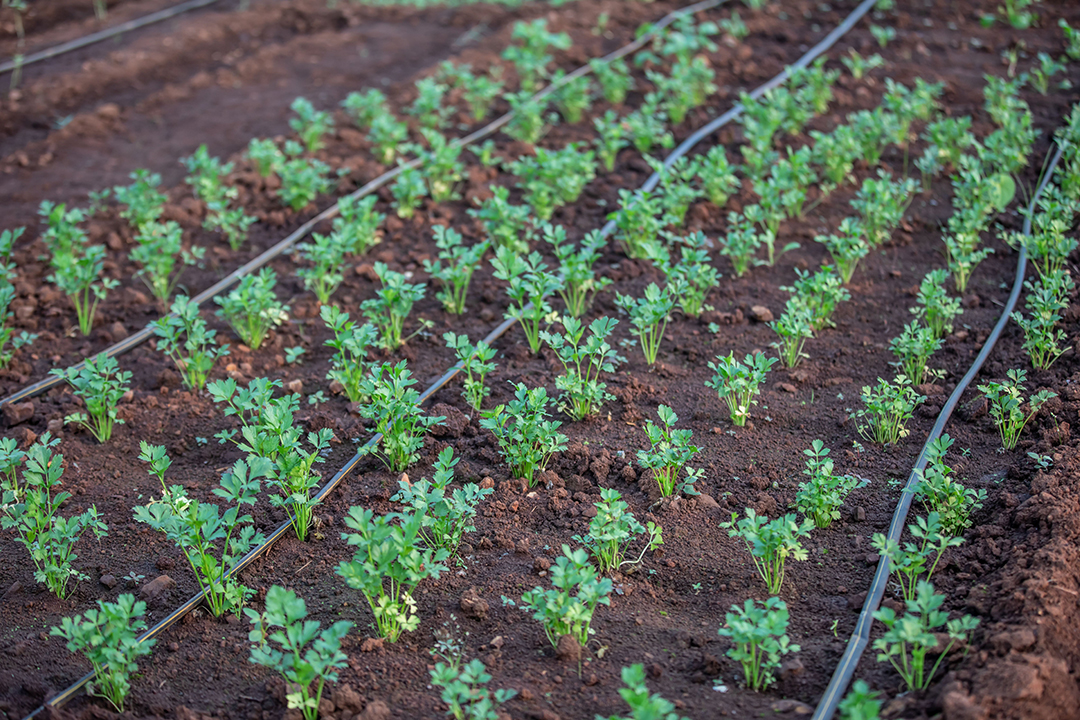
Drip (micro) irrigation
Drip irrigation delivers water slowly and directly to the base of each plant through a network of narrow tubing and emitters, rather than broadcasting it across a wider area. It is widely regarded as the most water-efficient method available, with some sources citing typical savings of 30–60% compared with overhead watering.
Because water goes to the root zone rather than the leaf or the surrounding surface, drip systems also reduce weed growth, limit fungal disease, and cope well with awkward, sloped, or irregular layouts. This makes it a good fit for containers, raised beds, and mixed planting displays – precisely the conditions found on most roof terraces. Installation is also comparatively simple, using flexible piping rather than extensive trenching. The trade-off: tubing can be vulnerable to sun damage and clogging over time, and it offers no protection against frost.
Best suited to: planters, containers, flowerbeds, and terrace-level displays where precision matters more than coverage.
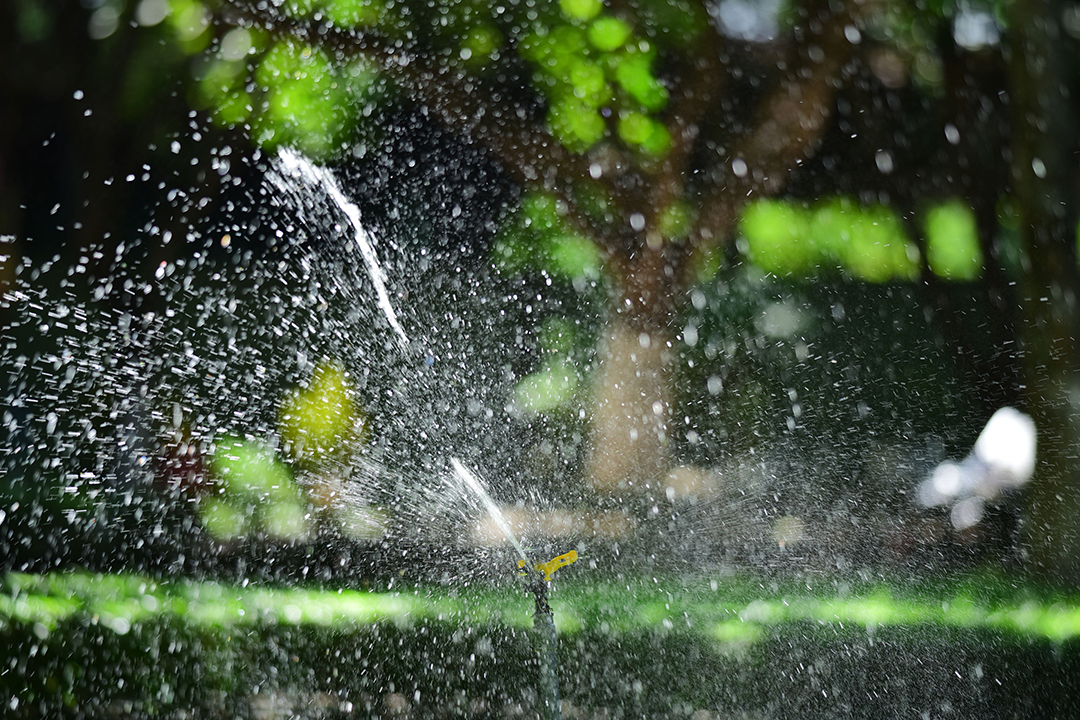
Sprinkler (spray) irrigation
Sprinkler systems distribute water through pressure-regulated heads or rotors, breaking it into droplets that mimic rainfall across a broader area. It is the standard choice for lawns and larger areas of open ground, where drip’s plant-by-plant precision would be impractical, and it integrates readily with automated timers and controls.
The compromise is efficiency: wind and heat cause uneven application and meaningful water loss to evaporation, and wetting the foliage rather than the root increases the risk of disease. Sprinkler systems also demand more careful calibration and ongoing maintenance to perform well.
Best suited to: lawns, open garden ground, and larger areas where broad, even coverage is the priority.

Smart, sensor-based control
The third category isn’t a delivery method so much as an intelligence layer that can sit on top of either of the above. Smart or soil-moisture-based controllers measure actual conditions in the ground rather than following a fixed timer, and override scheduled watering when plants simply don’t need it.
Best suited to: any site — but especially larger or higher-profile ones — where consistent plant health and minimal manual oversight both matter.
Choosing the right combination
In practice, the strongest landscapes rarely rely on one system alone. A typical approach pairs drip irrigation for containers and beds with sprinklers for any lawn or open ground, controlled by smart, sensor-based control across both to fine-tune timing and conserve water year-round.
The right combination depends on your planting, your structure, and how your space is used day to day – which is exactly the kind of conversation worth having with us before next year’s heat arrives.